
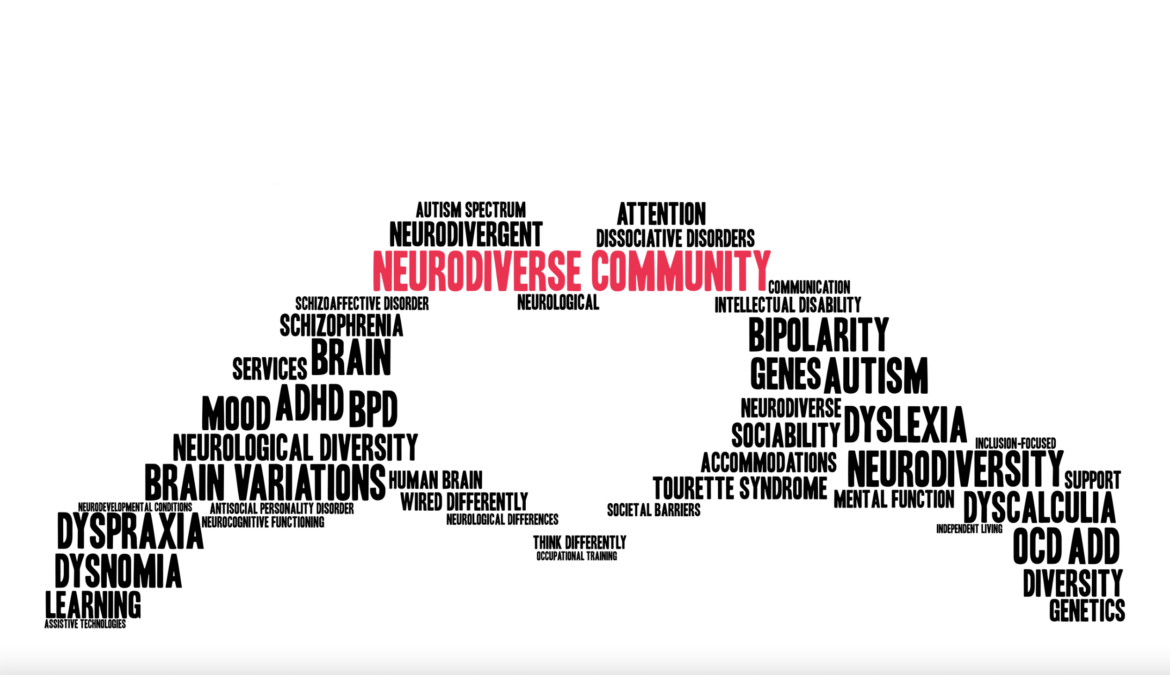
WHAT IS NEURODIVERSITY?
I had an opportunity to attend a training a couple weeks ago that was provided by the International Coaching Federation on the topic of “Neurodiversity: What All Coaches Must Know” by Morwenna Stewart, PCC. Now, coming from a medical background, I was aware of several of the different diagnoses that fall into that area, yet noticed a large gap and opportunity when discussing it with colleagues and other teams.
So what is neurodiversity? Neuro what? Most people have heard the term “diversity” in the broader sense yet are not familiar with this specific term “neurodiversity”.
Neurodiversity is defined in Webster’s Dictionary as:
∙individual differences in brain functioning regarded as normal variations within the human population.
∙the inclusion in a group, organization, etc. of people with different types of brain functioning.
Neurodiversity acknowledges there are different ways to process information, respond to situations and in how the chemical balance in the brain impacts this process. It is an approach to learning and disability that argues diverse neurological conditions are a result of normal variations in the human genome, a viewpoint that brain differences are normal, rather than deficits. In reality, everyone is, to some extent, “differently-abled”. Each neurodivergent person is unique, and it wouldn’t be accurate to generalize their cognitive process.
“Neurodiversity may be every bit as crucial for the human race as biodiversity is for life in general. Who can say what form of wiring will be best at any given moment?”— Harvey Blume, The Atlantic, 1998
Conditions such as ADHD, dyslexia, dyspraxia and autism are all on the neurodiversity spectrum as are many more. A lot of neurodiversity is a born identity whereas a lot of mental health conditions are developed during life. With an estimated 15% to 20% of the population being neurodivergent (https://www.ncbi.nlm.nih.gov/pmc/articles/PMC7732033/), we have the power and opportunity to learn more and honor the benefits and talents of neurodiverse people.
So how can we create a shift and change? Creating an inclusive and diverse workplace culture is fundamental for each company’s success. Only in educating companies, HR, management and leadership staff can there be an acceptance as to the uniqueness of everyone.
Neurodiverse people may have more difficulty in administrative, organization, and executive functioning skills and may require additional tools and time. Many people with neurological conditions such as autism spectrum disorder and dyslexia also have extraordinary skills, including in pattern recognition, memory, and mathematics. Yet they often struggle to fit the profiles sought by employers.
How can we observe, listen and create the safe environment for others to ask and receive support? Notice where an employee doesn’t fit in; it may be because they are working so hard to cover up or masking. Notice when you are working with a team, group or individuals and some may be having difficulty or are perceived as difficult, you need to look under the surface so you can gently give them information and gently step into that space with them. Are we being invalidating, dismissive and dehumanizing or can we be curious, compassionate, supportive and patient? It all starts with neurodiversity education and the willingness to want change within the work culture.
“When access is a practice of love, it is no longer simply about logistics and something you have to do, but something you want to do.” – Mia Mingus
In the coaching industry, we can explore neurodiverse client’s identities, labels, diagnosis, beliefs, strengths, fears, concerns, and challenges. Identity is something to be proud of yet society says having any one of the diagnoses is bad or wrong. Through coaching, we can explore how to go from shame to feeling proud of their identity. See where they are masking to cover up who they are, working hard to fit in or compensating due to hearing thousands of negative comments. If they don’t fit, it may be because they are working so hard to cover it up.
We recommend adding specific questions when first meeting with a neurodiverse employee or client –
∙Thanks for letting me know, how can I support you?
∙What would make this experience even better?
∙What works well for you in {coaching/specific work environment}?
∙Tell me what that means for you?
∙I appreciate you trusting me by sharing that. I’m here to support you.
∙Please let me know what that looks like.
∙What can I do to make my {coaching/management/supervision} more accessible for you?
∙What can we do to support you in your journey?
∙What additional support do you want?
Efforts to increase neurodiversity can enhance the workplace and community in many ways. Neurodivergent staff/clients can contribute their unique talents, skills and perspectives in ways that can directly benefit any organization’s mission and help support productivity and performance. May we all adopt a mindful approach to the different ways in which people work and communicate, seeing the humanness and unique gifts within each of us.
“Enriching our world {through coaching} so that every voice is heard” – Ideal Coaching Global
Here are some great articles on Neurodiversity to stimulate your curiosity and appetite to understand more. Don’t stop here, keep learning and becoming …
NeurodiversityHub Website – Resources for students, employers, clients and more https://www.neurodiversityhub.org/
Neurodiversity at work: a biopsychosocial model and the impact on working adults by Nancy Doyle, National Library of Medicine https://www.ncbi.nlm.nih.gov/pmc/articles/PMC7732033/
What is Neurodiversity? By Nicole Baumer, MD, MEd, Contributor, and Julia Frueh, MD, Guest Contributor, Harvard Health Publishing, Harvard Medical School https://www.health.harvard.edu/blog/what-is-neurodiversity-202111232645
A Rising Tide Lifts All Boats – Deloitte Center of Integrated Research https://www2.deloitte.com/us/en/insights/topics/talent/neurodiversity-in-the-workplace.html
Neurodiversity as a Competitive Advantage – Why you should embrace it in your workforce by Robert D. Austin and Gary P. Pisano https://hbr.org/2017/05/neurodiversity-as-a-competitive-advantage
ICF International Coaching Federation, Team and Group Coaching Community of Practice – Neurodiversity: What Coaches Must Know by Morwenna Stewart https://learning.coachingfederation.org/products/1556/team-and-group-coaching-community-of-practice-neurodiversity-what-coaches-must-know
Written by Lorinda Bartlett, PCC
Director of Programs, ICG
ICF Certified O.M.E., CBC, Executive & Mentor Coach
Inspire Breathwork Facilitator
Copyright Ideal Coaching Global and Lorinda Bartlett
Comments are closed.
Deb
Nov, 02, 2022 3:17 PMYes! Thank you Lorinda!